
Maybe your gums bleed in several areas every time you brush or floss, and lately they seem more swollen or tender than they used to. Maybe your breath keeps coming back even after brushing, or you have started noticing recession around a few teeth, larger spaces between them, or one area where the gums never seem to settle down. Those changes can be easy to live with for a while, especially when the teeth themselves do not hurt, but they can also be signs that the gums need more than a routine cleaning.
At Gary Johnson DDS, Family & Cosmetic Dentistry in Chico, CA, Dr. Gary Johnson can check whether those changes are coming from gingivitis or whether periodontal disease has started affecting the tissues and bone around the teeth. Gum disease often develops gradually, so pain is not always what gets your attention first. Instead, bleeding, persistent bad breath, gum recession, tenderness, deeper pockets, or teeth that feel different when you chew may be the clues.
Inflammation is a big part of what is happening. Plaque bacteria irritate the gums, and the body's immune response creates inflammation around those areas. When that stays limited to the gums, we may be dealing with gingivitis, but when it moves deeper and starts damaging the attachment and bone around the teeth, it becomes periodontal disease.
Bleeding Gums or Bad Breath? When Periodontal Care Can Help Protect Your Smile
Healthy gums should not bleed every time you brush or floss. An occasional spot of bleeding after you have been a little too aggressive is one thing, but gums that regularly bleed in several areas are often inflamed. Plaque sitting along the gumline can keep that inflammation going, and if it is not brought under control, the problem can move deeper.
Bad breath can come from many places, including certain foods, dry mouth, sinus issues, or smoking. However, when odor keeps returning despite brushing and cleaning the tongue, bacteria around and below the gums may be part of it. Deep periodontal pockets can hold plaque and tartar where a toothbrush and regular floss cannot reach well.
That is why bleeding and bad breath are worth mentioning even when the teeth themselves feel fine. Dr. Johnson can measure the spaces around the teeth, check for bleeding, and look for tartar below the gumline or bone loss on X-rays. Then treatment can be based on whether the inflammation is still limited to the gums or has already affected the supporting structures around the teeth.
Why Gums Start Bleeding
Bleeding usually starts when plaque sits along the gumline and the tissue becomes inflamed. The gums may look redder, puffier, or more tender than usual, and flossing can make them bleed because the tissue is already irritated. At this stage, the problem may still be gingivitis.
Gingivitis is reversible because the bone and connective tissue supporting the teeth have not been permanently damaged. With professional cleaning and consistent brushing and flossing, the inflammation can calm down and the gums can return to a healthier state. That is one of the biggest reasons to take early bleeding seriously instead of waiting for the gums to get worse.
People sometimes stop flossing because they see blood, but that can let more plaque collect in the same area. Gentle, regular cleaning usually helps rather than hurts when plaque is driving the inflammation. If the bleeding keeps happening despite good home care, though, the gums need to be checked more closely.
Why Bad Breath Can Be Connected to Gum Disease
Morning breath that improves after brushing is common. Breath that stays unpleasant throughout the day, keeps returning soon after you clean your teeth, or seems to come from one area of the mouth deserves more attention. Bacteria trapped around the gums can produce odors, particularly when tartar has collected below the gumline.
If periodontal pockets have developed, those areas become much harder to clean at home. Food debris, plaque, and bacteria can settle deeper around the teeth, and brushing the visible surfaces will not necessarily reach them. So you may feel like you are doing a good job and still notice the same problem coming back.
Dry mouth can make things worse because saliva normally helps rinse the mouth and control bacteria. Certain medications, dehydration, mouth breathing, and medical conditions can all reduce saliva. If bad breath is part of the reason you are coming in, tell Dr. Johnson whether your mouth also feels dry because several things can be happening at once.
Gingivitis and Periodontitis Are Not the Same Thing
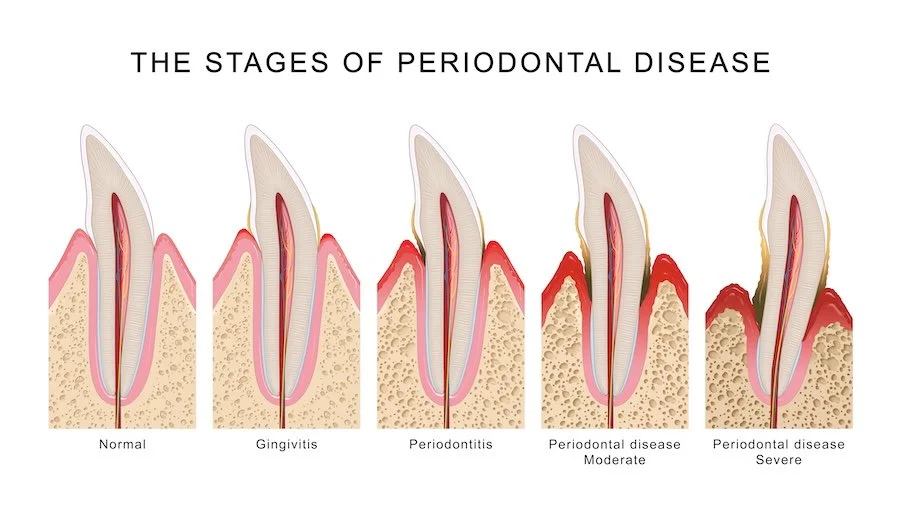
Gingivitis is inflammation of the gums without permanent loss of the bone and connective tissue around the teeth. You may notice bleeding, redness, or puffiness, but the teeth are still supported normally. Because that deeper support has not been lost, gingivitis can be reversed.
Periodontitis is different because the inflammation has moved deeper around the teeth. The attachment can break down, pockets can deepen, and bone can be lost around the roots. Once that bone and attachment are gone, periodontal disease is not considered reversible in the same way gingivitis is.
That does not mean nothing can be done. Periodontal treatment can reduce inflammation, control bacterial buildup, and help keep the disease from progressing. The goal is to stabilize the gums and protect as much of the remaining bone and tooth support as possible.
Receding Gums Can Be Another Sign
Gum recession can make a tooth look longer than it used to, or you may start seeing more of the root near the gumline. Sometimes recession comes from brushing too aggressively, a thin gum type, tooth position, or grinding. In other cases, periodontal disease has contributed to the loss of tissue around the tooth.
As more root surface becomes exposed, sensitivity can show up as well. Cold water, brushing, or even breathing in cool air may start bothering areas that never used to react. Meanwhile, the exposed root is more vulnerable to decay than the enamel-covered crown of the tooth.
If you notice several areas of recession getting worse, bring it up. Dr. Johnson can look at whether inflammation, bite pressure, brushing habits, or another cause is contributing. Then the plan can focus on slowing or stopping further damage rather than only treating the sensitivity.
How Periodontal Treatment Works
If the gum disease has moved beyond gingivitis, treatment may include scaling and root planing. This deeper cleaning removes tartar and bacterial buildup from below the gumline and along the root surfaces. By clearing those areas, the gums have a better chance to heal and the inflammation can settle.
The mouth may be treated in sections, depending on how many areas are involved and how deep the pockets are. Local anesthetic can be used to keep you comfortable while deeper buildup is removed. Afterward, some tenderness or sensitivity can happen for a short time while the tissues recover.
The gums are then checked again to see how they responded. Some patients move into periodontal maintenance visits more often than a standard six-month cleaning schedule because areas with a history of deeper disease can collect bacteria again more quickly. Those follow-up visits are part of keeping the condition controlled over time.
Why Deep Gum Pockets Need More Than a Regular Cleaning
A regular preventive cleaning is designed for a mouth without active periodontal disease. Once pockets deepen and tartar collects farther below the gumline, the cleaning has to reach areas that routine preventive care does not address as thoroughly. That is when scaling and root planing may be recommended.
It can be frustrating to hear that you need a different type of cleaning when you expected a routine visit. However, if tartar is sitting deep below the gums, leaving it there gives the inflammation more time to continue. The treatment needs to reach the same area where the disease is active.
Dr. Johnson can show you the periodontal measurements and X-rays so you can see where the deeper pockets and bone changes are. If only certain sections are involved, treatment may be focused there. If the disease is more widespread, several areas may need to be treated.
Gum Disease Can Affect the Bone Around Your Teeth
Teeth rely on bone and connective tissue for support, and periodontitis can gradually damage both. Because bone loss often happens without much pain, a patient can lose a surprising amount of support before realizing anything has changed. That is why X-rays and periodontal measurements are so important.
You may start noticing spaces opening between teeth, gum recession, or teeth that feel slightly mobile. In more advanced cases, chewing can feel different because certain teeth no longer feel as firm as they used to. Once bone has been lost, periodontal treatment focuses on preserving what remains and keeping inflammation under control.
This is also where gingivitis and periodontitis really separate from each other. Gingivitis can calm down without leaving permanent damage, while periodontitis has already affected the structures holding the teeth in place. The sooner that progression is stopped, the more support there is to protect.
The Role of Inflammation
Plaque bacteria start the irritation, but much of the tissue damage in periodontal disease comes from the body's ongoing inflammatory response. The immune system is trying to deal with bacteria around the gums, but when that response stays active for a long time, the surrounding tissue and bone can also be affected.
That is one reason periodontal care focuses on removing bacterial buildup from below the gumline. When there is less plaque and tartar driving the inflammation, the tissues have a better chance to settle. Home care then helps keep that bacterial load lower between visits.
Chronic gum inflammation is also one reason oral health gets discussed alongside overall health. Periodontal disease has been studied in connection with conditions such as diabetes and cardiovascular disease, although those relationships are complex and do not mean gum disease directly causes another medical condition. Still, keeping chronic inflammation in the mouth under control is good for the health of the tissues around your teeth and supports better oral health overall.
Smoking, Diabetes, and Dry Mouth Can Raise Gum Concerns
Some health conditions and habits can make periodontal problems harder to control. Diabetes, particularly when blood sugar is not well managed, is associated with more severe gum disease and slower healing. If you have diabetes, let Dr. Johnson know how it is being managed and whether anything has changed recently.
Smoking can also increase the risk of periodontal disease, and it can actually make bleeding less obvious in some people because of how tobacco affects blood flow in the gums. So gums that do not bleed are not automatically healthy in someone who smokes. Deeper pockets and bone loss can still be present.
Dry mouth can add another problem because less saliva means less natural rinsing and less protection against bacterial buildup. Medications are a common cause, although dehydration and certain medical conditions can contribute as well. If your mouth has felt drier lately, mention that along with any changes in your gums.
What You Can Do at Home Between Visits
Brushing twice a day and cleaning between the teeth daily helps keep plaque from rebuilding along the gumline. If regular floss is difficult in certain areas, an interdental brush or water flosser may be easier to use. What works best can depend on the spacing between your teeth and where the deeper periodontal areas are.
Someone with tight contacts may do well with floss, while another patient with larger spaces may get better access with small interdental brushes. Dr. Johnson and the hygiene team can show you where buildup tends to collect and which tools are likely to reach those spots more easily. That gives you something specific to work on instead of another generic reminder to floss.
If an area continues bleeding every time you clean it, do not just avoid that tooth. Mention it at your next visit, especially if the bleeding continues despite consistent home care. There may be tartar below the gumline or a deeper pocket that needs professional treatment.
How Periodontal Maintenance Is Different From a Routine Cleaning
After periodontal treatment, some patients move to periodontal maintenance rather than returning to standard preventive cleanings. These appointments are designed for people with a history of periodontitis, so the hygienist pays close attention to areas where deeper pockets or bone loss have already occurred.
The interval may also be shorter than six months because bacteria can recolonize deeper periodontal areas faster than they would in a healthy mouth. Depending on how the gums respond, Dr. Johnson may recommend visits every three or four months for a period of time. The schedule can change as the condition becomes more stable.
These visits also give the team a chance to compare pocket depths, bleeding, recession, and bone levels over time. If one area starts getting worse again, it can be addressed before more support is lost. For someone with periodontal disease, maintenance becomes an ongoing part of keeping the condition controlled.
When Bleeding or Bad Breath Deserves a Dental Visit
If your gums bleed regularly in several areas, your breath stays unpleasant despite good brushing, or you notice swelling, recession, or tenderness around certain teeth, schedule an exam. The same goes for teeth that feel loose or spaces that seem to be getting larger. Those changes can point to a periodontal problem that needs more than home care.
You should also call sooner if you develop swelling, pus, severe pain, or a bad taste coming from one area. Those symptoms may point to an abscess or another infection that needs prompt treatment. Periodontal disease itself can be surprisingly painless, but active infections can become uncomfortable quickly.
And if it has simply been a while since your last cleaning, you do not need to figure out which type of gum disease you have before you come in. Dr. Johnson can examine the gums, take the needed measurements, and review the bone around the teeth. Then you will know whether you are dealing with reversible gingivitis or periodontal disease that needs ongoing treatment and maintenance.
Periodontal Care at Gary Johnson DDS in Chico, CA
Bleeding gums, persistent bad breath, recession, deeper pockets, and changes around the teeth can all point to inflammation that needs attention. If it is still gingivitis, treatment and better home care can often reverse the inflammation before permanent support is lost. If periodontitis has already developed, the focus shifts to controlling the disease, reducing inflammation, and protecting the bone and tissue that remain.
At Gary Johnson DDS, Family & Cosmetic Dentistry in Chico, CA, Dr. Gary Johnson can evaluate your gums, explain what the periodontal measurements and X-rays show, and recommend care based on what is happening around your teeth now. If your gums have been bleeding in several areas, your breath keeps returning despite brushing, or you have started noticing recession or other changes around the gumline, call the office to schedule a periodontal evaluation!