
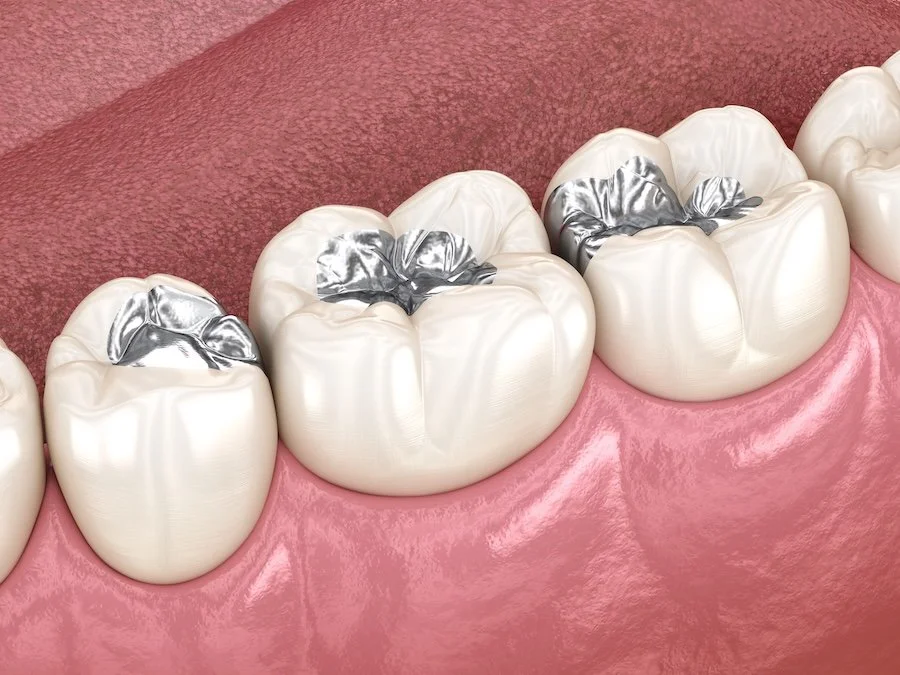
Many patients still have metal fillings that were placed years—sometimes decades—ago. If you’ve ever noticed a small silver spot when looking at your molars in the mirror, you’re seeing a restoration that was once the standard way dentists repaired cavities.
Those fillings were chosen for a reason. Traditional metal fillings are durable and have helped protect countless teeth over the years. In fact, it’s not unusual for dentists to see amalgam restorations that have been doing their job faithfully for twenty years or more.
However, dentistry has continued to evolve. Modern restorative materials allow dentists to repair teeth in ways that preserve more natural structure and blend more seamlessly with surrounding enamel. For some patients, that means replacing older fillings when they begin to wear out. For others, it simply means choosing a restoration that looks more natural.
At Gary Johnson DDS, Family & Cosmetic Dentistry in Chico, CA, Dr. Gary Johnson regularly evaluates older fillings during routine dental exams. When a restoration begins to show signs of aging—or when a patient prefers a more modern alternative—there are several reliable options available.
Why Some Older Fillings Are Replaced
Not every metal filling needs to be replaced simply because it has been there for many years. Many older restorations remain stable and continue functioning well.
That said, fillings live a busy life. Every day they experience pressure from chewing, temperature changes from hot and cold foods, and the constant cycle of biting and releasing force. Over time, even durable materials can begin to show small signs of wear.
Dentists sometimes recommend replacement if they notice:
Edges of the filling beginning to break down
Small gaps forming between the filling and the tooth
Cracks developing in the surrounding enamel
New decay appearing near the restoration
Catching these changes early helps protect the remaining tooth structure and often prevents the need for more extensive treatment later.
How Metal Fillings Can Affect the Tooth Over Time
Traditional metal fillings—often called amalgam fillings—are made from a mixture of metals. They were widely used for many years because of their strength and ability to withstand heavy chewing pressure.
Metal, however, responds to temperature changes differently than natural tooth structure. Hot and cold foods can cause the material to expand and contract slightly. Over long periods of time, this repeated movement may contribute to small stress lines or cracks in the surrounding enamel.
These changes tend to develop gradually, which is why Dr. Johnson keeps an eye on older restorations during routine exams.
Tooth-Colored Composite Fillings
One of the most common replacements for older metal fillings today is composite resin.
Composite fillings are tooth-colored and can be closely matched to the natural shade of the surrounding enamel. Once placed and polished, they blend naturally with the rest of the tooth—often making the restoration difficult to notice.
Another benefit of composite material is that it bonds directly to the tooth. This bonding allows dentists to remove less healthy tooth structure when placing the filling. For many small to moderate cavities, composite restorations provide a strong and aesthetically pleasing solution.
Ceramic and Porcelain Restorations
When a filling is very large or when a tooth needs additional reinforcement, dentists may recommend a ceramic restoration, such as an inlay or onlay.
These restorations are typically fabricated from porcelain and created outside the mouth using impressions or digital scans of the tooth. Once completed, they are bonded securely to the prepared tooth.
Porcelain restorations are valued for their durability and their ability to mimic the natural translucency of enamel. In situations where a traditional filling may not provide enough support, they can offer a stronger and longer-lasting alternative.
When Replacement May Be Recommended
Dentists may suggest replacing an older metal filling when:
The filling shows signs of wear or breakdown
Cracks appear in the surrounding tooth structure
New decay develops around the filling
The filling is very large and weakening the tooth
A patient prefers a more natural-looking restoration
Every tooth is different, so the decision to replace a filling is usually based on the condition of the tooth and the restoration rather than its age alone.
Restorative Dentistry at Gary Johnson DDS in Chico, CA
Older metal fillings have served dentistry well for many years, but modern materials now offer additional options for restoring teeth with strength and a more natural appearance.
At Gary Johnson DDS, Family & Cosmetic Dentistry in Chico, CA, Dr. Gary Johnson carefully evaluates existing restorations during routine visits. When a filling shows signs of aging—or when a patient is interested in a more natural-looking option—modern restorative treatments can help maintain the health and function of the tooth.
If you have older metal fillings and are wondering whether they should be replaced, scheduling an exam at Gary Johnson DDS, Family & Cosmetic Dentistry in Chico, CA can help determine whether your restorations are still performing well or if an updated solution may be beneficial.