
Missing teeth can affect everyday life in ways you might not expect — from what you feel comfortable eating to how you laugh in photos. Fortunately, there are solid options for replacing them, and two of the most talked-about are traditional dentures and implant-supported dentures. At Gary Johnson DDS, Family & Cosmetic Dentistry in Chico, CA, Dr. Gary Johnson helps patients make sense of both options based on comfort, function, and long-term results.
Let’s walk through how these solutions differ, what daily life with each one looks like, and how to decide what’s right for you.
What Traditional Dentures Offer
Traditional dentures are probably what most people picture when they think of denture teeth: a set of replacement teeth that rest on the gums and can be taken out nightly.
They’re made to replace a full arch or a partial set of missing teeth, and they do a good job of restoring your smile and basic function — especially when tooth loss has been longstanding.
Here’s what you’ll notice with traditional dentures:
• You remove them at night and clean them daily
• They rely on suction and fit — and in some cases adhesive — to stay in place
• There’s an adjustment period for chewing and speaking
• They’re generally more affordable up front than implant-supported options
Some people adapt quickly and forget they’re wearing them, while others notice slipping during certain foods or over time as the bone changes shape. Even though they’re removable, well-fitting dentures can still provide a big improvement over missing teeth.
What Makes Implant-Supported Dentures Different
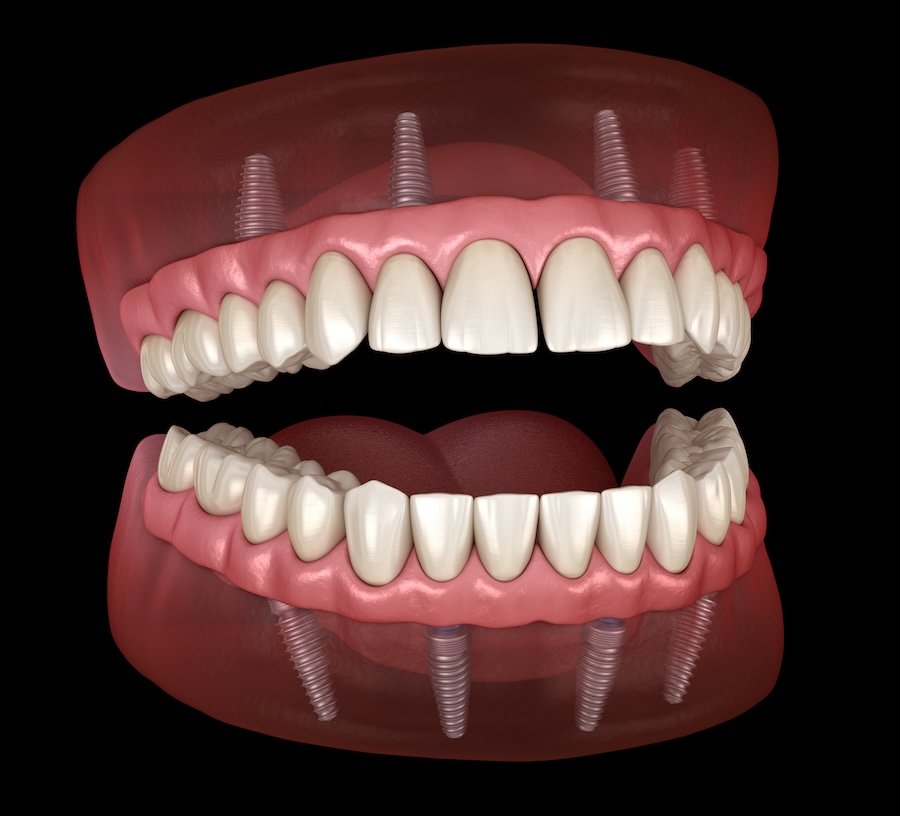
Now imagine dentures that don’t rely on suction, sticky adhesive, or bone shape alone to stay in place. That’s what implant-supported dentures do.
Instead of just sitting on the gums, they attach securely to dental implants — titanium posts placed in your jawbone that act as artificial tooth roots. Once healed, the implants provide a stable foundation for your denture to clip or lock onto.
In everyday life, this tends to translate into:
• Confidence that your dentures stay put — even when you’re eating chewy or firm foods
• Less shifting or irritation of the gums
• No need for denture adhesives
• A feel that many patients describe as closer to having natural teeth
Because the implants help preserve jawbone volume, implant-supported dentures also slow the bone loss that naturally happens with missing teeth. That can make a subtle but meaningful difference in how your face looks and feels over time.
How They Compare for Daily Life
Stability & Confidence
Traditional dentures can move a bit during talking or chewing. Implant-supported dentures tend to stay secure, which many patients find makes everyday meals and conversations easier.
Comfort
Traditional dentures can be perfectly comfortable once you’re used to them. Implant-supported dentures often feel more consistent because they aren’t relying on soft tissue alone for support.
Bone Health
When teeth (and roots) are missing, the jawbone gradually resorbs. Implants mimic natural tooth roots and help maintain bone. Traditional dentures don’t provide that stimulation.
Routine & Maintenance
Traditional dentures are taken out daily for cleaning. Implant-supported dentures stay in place during the day and are cared for much like natural teeth — brushing, regular hygiene visits, and occasional professional maintenance.
Cost
Traditional dentures typically cost less initially. Implant-supported dentures involve a higher upfront investment because of the surgical component. For many patients, the added stability and function justify the difference over the long term.
How to Decide What’s Best for You
There’s no single answer that fits everyone — it comes down to your goals, preferences, and oral health. Here are a few ways to think about it:
Traditional dentures might be right for you if:
• You want a reliable, non-surgical solution
• You’re focused on initial cost
• You’re comfortable with removable dentures
• Your bone structure makes implants more complex without grafting
Implant-supported dentures might be a better fit if:
• You want maximum stability while eating or speaking
• You’d prefer not to use adhesives
• Preserving jawbone is a priority
• You’re comfortable with the surgical process
Some people start with traditional dentures and later choose implants when they’re ready. Others go straight to implant-supported dentures because the added stability improves daily confidence and comfort.
Personalized Guidance at Gary Johnson DDS
Choosing between traditional and implant-supported dentures isn’t something you should guess at — it’s a decision based on your unique mouth, your lifestyle, and how you want your smile to feel every day.
At Gary Johnson DDS, Family & Cosmetic Dentistry in Chico, CA, Dr. Johnson takes time with every patient to explain the differences, answer questions, and recommend the approach that fits your scenario. You won’t get a one-size-fits-all answer — you’ll get a recommendation tailored to your needs.
We’ll look at your jawbone, your oral health history, your goals for eating and speaking, and your priorities for maintenance and comfort. Then we’ll talk through the realistic expectations for each option so you can make a confident decision.
Denture Options That Fit Your Life
Restoring your smile — whether with traditional dentures or implant-supported dentures — is a meaningful step toward everyday comfort and confidence. When you understand how each option performs in daily life, you’ll be better equipped to choose the one that suits how you want to live, eat, and interact with the people around you.
Call our Chico, CA office to schedule a consultation with Dr. Gary Johnson. We’ll walk through your options, evaluate your oral health, and help you decide on a solution that supports your smile now and for years to come. Whatever direction you choose, we’ll make sure it aligns with your goals and gives you a dependable, functional result you can live with — and enjoy.